
Saree: Pride of India, Life of Fashion
The sari isn’t just a garment—it’s an identity of Indian culture. This centuries-old garment still graces every Indian home, every event, and now even the fashion runways. Whether it’s a wedding, an office party, or a casual get-together—the sari makes every occasion special.
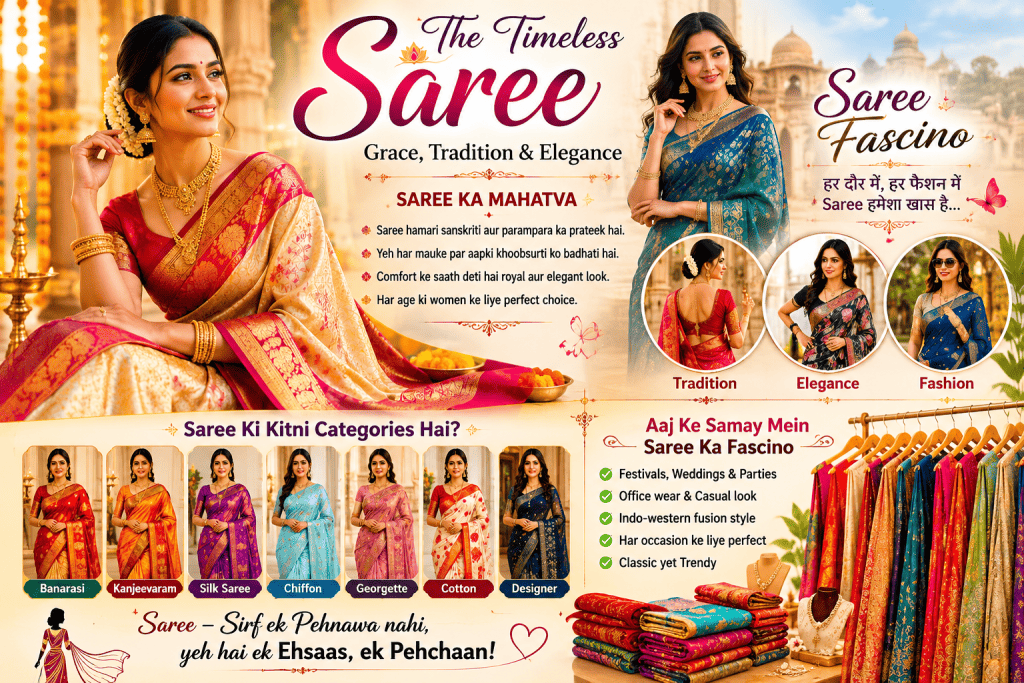
Importance of Saree
The significance of a saree lies not just in its design or fabric, but in the story and emotion behind it.
1. Cultural Identity The sari is worn in different styles in every corner of India—the tant sari of Bengal, the bandhani of Gujarat, the nauvari of Maharashtra, or the Kanjeevaram of South India. Each region has its own unique style that reflects its culture.
2. Versatility : The sari is a garment that suits every body type, every age, and every occasion. You can create a completely new look by draping the same sari in different ways.
3. Grace and Elegance Wearing a sari is unique. It’s considered a symbol of confidence and elegance. Many say that a sari brings out both a woman’s personality and beauty.
4. Emotional Connection: A saree passed down from your mother, grandmother, or grandmother becomes a family heirloom. It acts as an emotional bridge between generations.
Importance of Saree in Fashion
In today’s fashion world, the craze for saree has not reduced, but has come back in a new form.
- Designer Sarees : From Bollywood celebrities to international fashion shows, designer sarees have become a big trend. Designers like Sabyasachi and Manish Malhotra have taken the saree to the global stage.
- Fusion Wear : Today, saris are being paired with crop tops, jackets, belts, or even sneakers. It’s the perfect blend of modern and traditional.
- Social Media Influence : Content like “saree draping styles” and “saree styling tips” are becoming very popular on Instagram and fashion blogs, due to which the young generation is also getting attracted towards saree.
- Sustainable Fashion : Handloom sarees are now also seen as eco-friendly and sustainable fashion, which also supports local weavers.
Saree Categories
The world of saris is vast. Here are some popular categories that stand out:
- Banarasi Saree – From Varanasi, Uttar Pradesh, with rich silk fabric and intricate zari work. Popular for weddings and festivals.
- Kanjeevaram Saree – Pure silk saree from South India (Tamil Nadu), known for its durability and traditional motifs.
- Chanderi Saree – From Madhya Pradesh, lightweight and sheer texture, perfect for summer and day-functions.
- Bandhani Saree – Colorful saree made with tie-and-dye technique of Gujarat and Rajasthan.
- Tant Saree – Cotton saree from Bengal, which is comfortable and lightweight for daily wear.
- Patola Saree – Luxury saree made using the double ikat weaving technique of Gujarat, famous for its geometric patterns.
- Georgette and Chiffon Saree – Modern and lightweight options that are trending for office wear or party wear.
- Net and Sequined Saree – A popular choice for today’s glamorous parties and cocktail events.
Where is the saree in today’s fashion?
Today, the sari is not just limited to traditional events, but has also become a modern fashion statement. Bollywood actresses are making global headlines by wearing saris on the red carpet. The younger generation also considers the sari not boring, but “trendy” and a “statement piece.” The demand for saris is continuously increasing on online shopping platforms as well, and designer collaborations have made it even more premium.
Conclusion
The sari is a garment that changes with time, but never strays from its roots. It’s a beautiful blend of tradition and modernity. Whether you wear a classic Banarasi or try a modern fusion sari, the sari tells its own unique story each time—and that’s its greatest beauty.